Beyond anthropocentrism: animals and other life
Voices from ChernobylBeyond anthropocentrism: animals and other life gathers the book’s challenge to human-centered thinking around the living world transformed by Chernobyl. Animals, insects, plants, and soil are not merely scenery for human loss: they are abandoned, exposed, displaced, and buried, while their presence unsettles the assumption that human suffering alone deserves attention. The testimonies also register a change in perception, as observers become less willing to treat other life as an expendable background to human needs.
The shift in attention
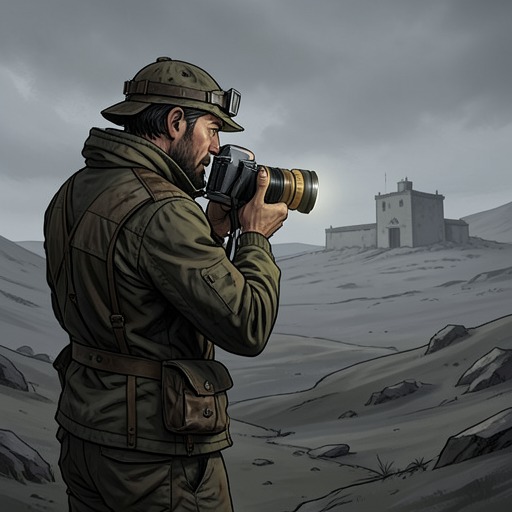
A cameraman describes how his attention changed after filming an old woman and an apple tree without a smell. He began making films about animals, even though people objected when he showed his Chernobyl films to children. He believed the children were already living amid fear, with talk of changing blood and disrupted immune systems, yet he did not think shielding them from the images answered what the films raised. One boy, stammering and blushing, asked why nobody had helped the animals. The question stayed with the cameraman because he could not answer it. He saw a gap in the arts around him: human suffering and love received attention, while the suffering of other living things did not.
His response was not simply to add animals as another subject. He said he had become closer to animals, trees, and birds, and that the distance between them had narrowed. Returning to The Zone years later, he filmed a wild boar emerging from an abandoned human house and then an elk. He wanted to make a film called Hostages and to see the world through an animal’s eyes. His comparison with Saint Francis, who addressed birds as equals, turns the question of perspective into a question of hierarchy: perhaps the human is not the only being capable of speaking, and perhaps attention need not mean condescension.
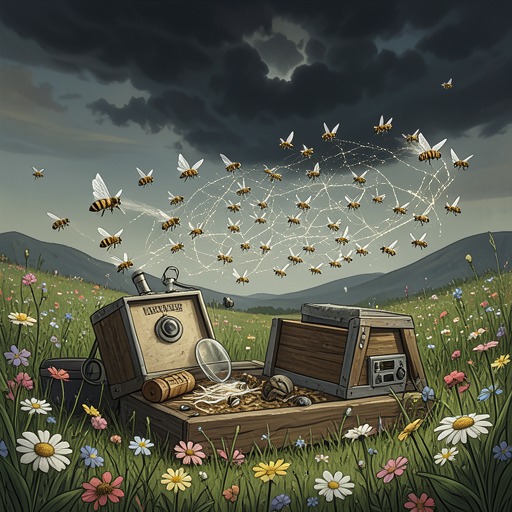
The same shift appears in a biologist’s account of an earlier encounter with a bee colony. After spending a week near the bees, the biologist was allowed to approach within the three-meter distance that had kept other people away, and fed jam into the nest on a match. The teacher’s injunction not to destroy an anthill because it was a good form of alien life had taught respect for nonhuman existence; the biologist came to understand the bee nest as connected to the whole forest. A wild mouse sitting on the biologist’s sneakers made that relationship tangible: the animal seemed to treat the person as part of a familiar scene, someone who had been there yesterday and would be there tomorrow. This recollection gives other life a presence that is not reducible to a human symbol, even as it reaches the reader through a human witness.
Abandonment and unequal care
The accounts of evacuation make the ethical question concrete. One witness recalls that a project was proposed in the first months after the accident to evacuate animals along with people, then asks how such a plan could work. Animals above ground might perhaps be moved, but the plan could not readily include insects and worms underground, or pigeons and sparrows in the sky. The question is not answered by an easy claim that every life could have been rescued. Instead, the problem reveals how human systems define which beings can be counted, informed, transported, and protected—and how much life falls outside those arrangements.
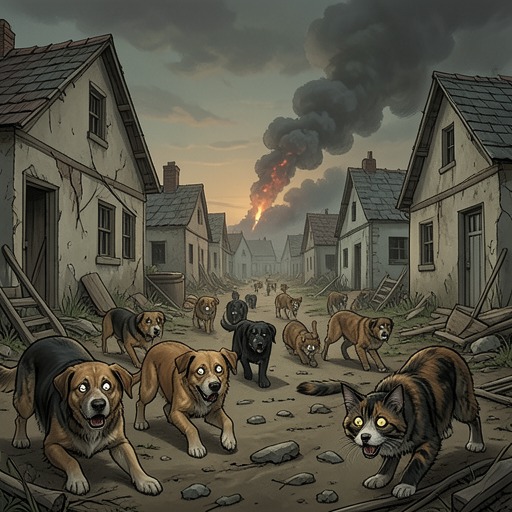
The village scenes show what that exclusion looked like. An abandoned house held a real cat on its windowsill; the witness had first taken it for a clay ornament. The cat had eaten the geraniums. Notes left on doors asked strangers not to search for valuables and not to damage the house, while other messages said goodbye to homes or recorded when the residents would leave. Children’s notes pleaded that their cat, Zhulka, not be killed and warned against beating another cat because rats would eat everything. A separate account recalls boys telling an old woman that she could not take her cat because its fur was radioactive. She refused to leave without him, saying that he was her family. Together, these details place animals inside the intimate life of homes and families even as evacuation rules and radioactive danger make their fate uncertain.
Another testimony describes a different kind of abandonment: the removal of contaminated ground. Workers dug up the diseased upper layer, loaded it into vehicles, and carried it to burial sites that proved to be ordinary pits, not the engineered structures the witness had imagined. They rolled away the earth like large rugs, taking grass, flowers, roots, bugs, spiders, and worms with it. The work seemed like an attempt to lift an entire living surface out of place. Houses, barns, trees, roads, kindergartens, and wells remained exposed after the earth was removed; the workers returned to strip roofs and slate, even when they understood that much of the labor was useless. The physical operation thus made the nonhuman cost inseparable from the human effort to contain danger.
Witnessing more-than-human loss
The witnesses describe forms of life that resist becoming mere background. One observer’s strongest impression of The Zone was not an abstract image of devastation but the bugs. Birds had been in their nests on arrival; by departure, apples lay on the snow, and the group had not managed to bury all of them. The witness recalls burying earth in earth, with bugs, spiders, and leeches, as if handling a separate world. The detail of the uneaten, unburied apples and the creatures removed with the soil gives the cleanup a scale that a description focused only on buildings or human evacuation would miss.
A hunter’s recollection adds the force of direct attention to an animal’s face. As a child he killed a fox; later he killed a doe and swore never to kill another, because animals have such expressive eyes. He contrasts human beings, who understand things, with animals and birds, which simply live. That contrast does not grant animals human language or knowledge; instead, it questions whether human understanding is the proper measure of a life’s value. Another speaker extends the claim across even less favored creatures: flies should fly, wasps and cockroaches should crawl, and the speaker no longer wants to hurt a cockroach. The insistence that everyone should be able to live refuses to reserve compassion for animals conventionally regarded as beautiful or useful.
Children’s drawings register how the disaster enters perception before it can be made fully intelligible. In one drawing a stork walks through a field beneath the words No one told the stork. In another set of images, trees grow upside down and river water is red or yellow; the children draw and then cry. The drawings are not evidence that the children can explain the disaster. They show instead how its effects become visible through an altered natural world and through the lives of beings that were not warned or consulted.
Limits of human responsibility
The testimonies do not pretend that the witnesses have a workable solution to the fate of every creature. The proposed animal evacuation immediately runs into the difficulty of moving life underground or in the air. The workers’ burial of contaminated soil likewise turns protection into another injury: the operation removes danger from one place by carrying away a layer that contains plants and small animals. And the remembered cat survives in the house without any explanation of how it entered or whether people left it there. These unresolved details matter because they prevent a consoling story in which human concern automatically becomes effective care.
The book’s movement beyond anthropocentrism is therefore also a movement beyond human mastery. The witnesses cannot speak for every animal, undo the abandonment, or make the damaged landscape legible all at once. They can, however, notice what conventional accounts leave out: the cat among geraniums, the plea to spare Zhulka, the creatures rolled into burial pits, and the insects that remain in memory more forcefully than grander scenes. Through these particulars, Chernobyl becomes not only a human catastrophe but a test of whose lives are seen, whose suffering is recorded, and whether other living beings can be treated as neighbors rather than as disposable surroundings.